Confidential and Postal STI Testing by Country: Public Clinics, Self-Sampling and Privacy Rules (US, UK, Canada, Australia)
Medical records are confidential everywhere, but insurance EOBs, health-card claims and postal kits work differently across the US, UK, Canada and Australia.

Asked at 2am. Answered from sources.
When someone searches “confidential STI test near me” late at night, they are usually worried about two very practical leaks: a family member or housemate seeing a clinic letter or postal kit at the door, or an itemised insurance statement naming the tests ordered.
Every public-health system in the United States, the United Kingdom, Canada and Australia treats STI results as confidential medical information. What changes across borders is whether a bill or insurance statement is generated, whether you need a national health card or GP referral, and whether the public system mails free self-sampling kits in plain packaging.
The short answer
- Have symptoms, a known STI contact, or need HIV PEP within 72 hours? Skip postal kits and go to an in-person sexual-health clinic, urgent clinic or physician. UKHSA, CDC, Canadian and Australian guidance all reserve mail/online self-sampling for asymptomatic screening.
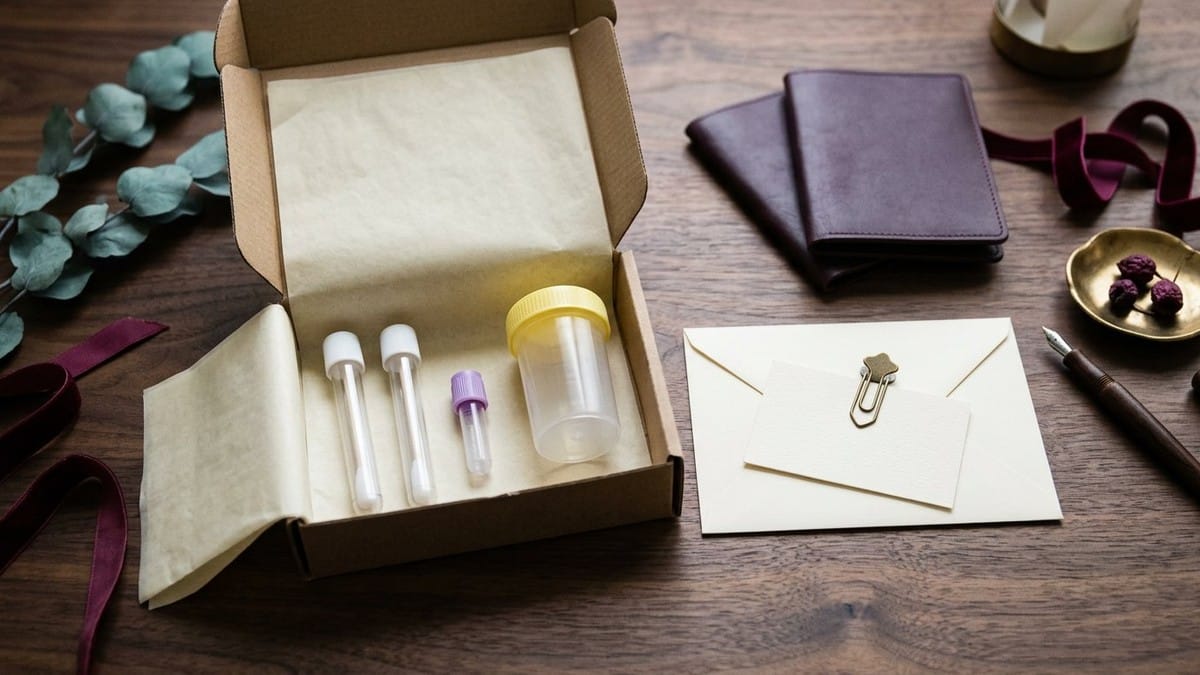
- United Kingdom (NHS / UKHSA): Sexual-health (GUM) clinics are free and open-access (no GP referral needed), and most local authorities mail free, plain-envelope postal self-sampling kits for chlamydia, gonorrhoea, HIV and syphilis.
- United States (CDC): Using a parent’s or partner’s private health insurance plan can generate an Explanation of Benefits (EOB) listing the STI lab tests performed. To avoid an EOB, use a public health department STI clinic, Title X clinic or self-pay option.
- Canada (CATIE / BCCDC): Public sexual-health clinics offer free testing—often without needing a provincial health card—and several provinces distinguish nominal (name-based), non-nominal (code-based) and anonymous HIV testing, plus code-based online lab requisitions such as BC’s GetCheckedOnline.
- Australia (Healthdirect): State and territory public sexual-health centres provide free, confidential testing and frequently do not require a Medicare card or GP referral (including for visitors and priority/symptomatic patients).
How privacy, cost and postal testing compare across four countries
Before you book, separate medical confidentiality (who can legally read your chart) from billing and mail visibility (what arrives in the mailbox or on a shared insurance portal).
| Jurisdiction & public-health source (checked date) | Free / public clinic route | Health card or GP referral required? | Public postal or online self-sampling | Main privacy trap to avoid |
|---|---|---|---|---|
| United States — CDC STI Treatment Guidelines (checked 22 Oct 2026) | Local/state health department STD clinics, Title X family-planning clinics and community health centres (free or sliding-scale). | No GP referral needed at public STD clinics; insurance is optional if paying sliding-scale or using public grant funding. | Some state/local health departments mail free HIV/STI self-collection kits; commercial mail-in kits vary in cost and regulatory validation. | Insurance Explanation of Benefits (EOB): CDC warns that billing a shared or parent’s private insurance plan can trigger an EOB or bill listing the exact STI lab tests performed. |
| United Kingdom — UKHSA & NHS (checked 22 Oct 2026) | NHS sexual-health / GUM clinics across England, Scotland, Wales and Northern Ireland—completely free. | No GP referral required. Open-access clinics do not share sexual-health records with your routine GP record unless you ask them to. | Wide public postal coverage: UKHSA notes local services send free, plain-packaging self-sampling kits (swabs, urine, finger-prick blood) with freepost return and SMS results. | Ordering a postal kit to a shared home where someone opens your mail—many UK services let you choose pharmacy/venue click-and-collect or in-clinic pickup instead. |
| Canada — CATIE & BCCDC SmartSexResource (checked 22 Oct 2026) | Provincial/municipal public-health sexual-health clinics and community HIV/STI testing sites. | No GP referral required at sexual-health clinics; many public STI clinics (and BC’s GetCheckedOnline) do not require a provincial health card or ID. | In British Columbia, GetCheckedOnline lets asymptomatic users generate a coded lab form online and drop samples at participating labs; licensed HIV self-test kits are also available across Canada. | Confusing nominal, non-nominal and anonymous testing: nominal testing puts your full name on the lab order and provincial EHR, whereas anonymous HIV testing (where available) uses an unlinked code. |
| Australia — Healthdirect Australia (checked 22 Oct 2026) | State and territory public sexual-health centres (plus Medicare bulk-billed GP and telehealth clinics). | Public sexual-health clinics generally require no GP referral and many require no Medicare card (travellers and non-residents can attend many public centres). | Selected state programs, telehealth services and vending/peer services offer online pathology referrals or self-collection pathways for asymptomatic screening. | If you use a Medicare card on a shared family Medicare account, the visit date/provider item (though not the test result) can appear on the Medicare claims history unless you have your own separate Medicare record or use a no-card public sexual-health clinic. |
What a comprehensive screen actually tests (and why “full blood panel” can mislead)
One of the commonest testing mistakes in every country is assuming that a single blood draw checks for “everything.” Bacterial STIs such as chlamydia and gonorrhoea are tested using urine or site-specific swabs (vaginal, throat, rectal)—not a blood test. Blood samples are used for HIV, syphilis and hepatitis B/C.
| Sample type | What it typically screens for | When self-sampling works vs when you need an exam |
|---|---|---|
| First-catch urine or self-taken vaginal swab | Chlamydia and gonorrhoea (nucleic acid amplification test / NAAT); some clinics also test for Trichomonas or Mycoplasma genitalium when indicated. | Validated for routine asymptomatic screening in clinic or by post. If you have pelvic/testicular pain, abnormal discharge or bleeding, see a clinician in person. |
| Self-taken throat and rectal swabs | Pharyngeal (throat) and rectal chlamydia and gonorrhoea if you have had oral or receptive anal sex. | CDC and UKHSA explicitly support self-collected throat and rectal swabs; genital-only testing misses many throat and rectal infections. |
| Vein blood draw or finger-prick blood micro-tube | HIV (4th-generation antigen/antibody lab test or point-of-care/postal screen), syphilis antibodies, and hepatitis B/C where indicated. | UK postal kits use a finger-prick blood tube for HIV and syphilis; any reactive home or rapid HIV screen must be confirmed with a standard venous laboratory blood test. |
| Swab of an active sore, blister or ulcer | Herpes simplex virus (HSV PCR/NAAT) or syphilis PCR when a lesion is present. | Requires an in-person clinical exam while the sore or blister is active; routine asymptomatic herpes blood tests are not part of standard public postal kits. |
How to keep your test genuinely private
- Ask how the visit is billed before you hand over an insurance or family health card. In the United States, ask whether a Title X or public-health sliding-scale fee is available without billing a family policy. In Australia or Canada, if you do not want a claim on a shared family card, ask a public sexual-health clinic whether you can be seen without Medicare or provincial health-card billing.
- Give the clinic a private phone number and ask how results are sent. UK, Canadian and Australian public services commonly send negative results by SMS or secure portal login without naming specific infections in the notification preview.
- Match the test date to the window period. Testing the morning after a condomless encounter only measures your baseline before that encounter. If you test early, ask the clinic which date makes a follow-up test conclusive—and check our Tools & Charts page for our reference tables.
- Use urgent care immediately for the 72-hour clocks. If you need HIV post-exposure prophylaxis (PEP, within 72 hours) or emergency contraception, do not wait for a postal kit to arrive in the mail.
Bottom line
If you have no symptoms and want maximum privacy, public sexual-health clinics and official public-health postal/online services in the UK, Canada, Australia and US health departments are built specifically to test you without notifying a boss, landlord or family member. Check the billing and mailing route first, include throat and rectal swabs when relevant, and go in person whenever symptoms or a 72-hour PEP window are involved.
Sources checked 22 October 2026:
- UK Health Security Agency (UKHSA): Getting tested for an STI — Your guide to how it works
- U.S. CDC: Sexually Transmitted Infections Treatment Guidelines, 2021 (Confidentiality, EOBs and Self-Collected Swabs)
- CATIE (Canada): The HIV testing process — Nominal, non-nominal and anonymous testing
- CATIE (Canada): HIV self-testing
- BC Centre for Disease Control (BCCDC): How GetCheckedOnline works
- BCCDC SmartSexResource: Test Results & Privacy
- Healthdirect Australia: STI testing, treatment and partner notification guidance
This guide provides general public-health and privacy information, not a medical diagnosis. If you have symptoms, a known STI exposure or a recent high-risk HIV exposure within 72 hours, seek in-person clinical care promptly. See Talk to a Real Clinician and our medical disclaimer.