Buying Condoms & Emergency Contraception Privately: Instant-Delivery Apps vs Pharmacy Pickup
Not all 'discreet delivery' promises protect your household privacy. Compare rapid grocery apps, dark-store couriers, pharmacist-sealed delivery, pharmacy Click & Collect, and 24/7 postal lockers across receipt exposure, substitution texts, ID checks, and bank descriptors.

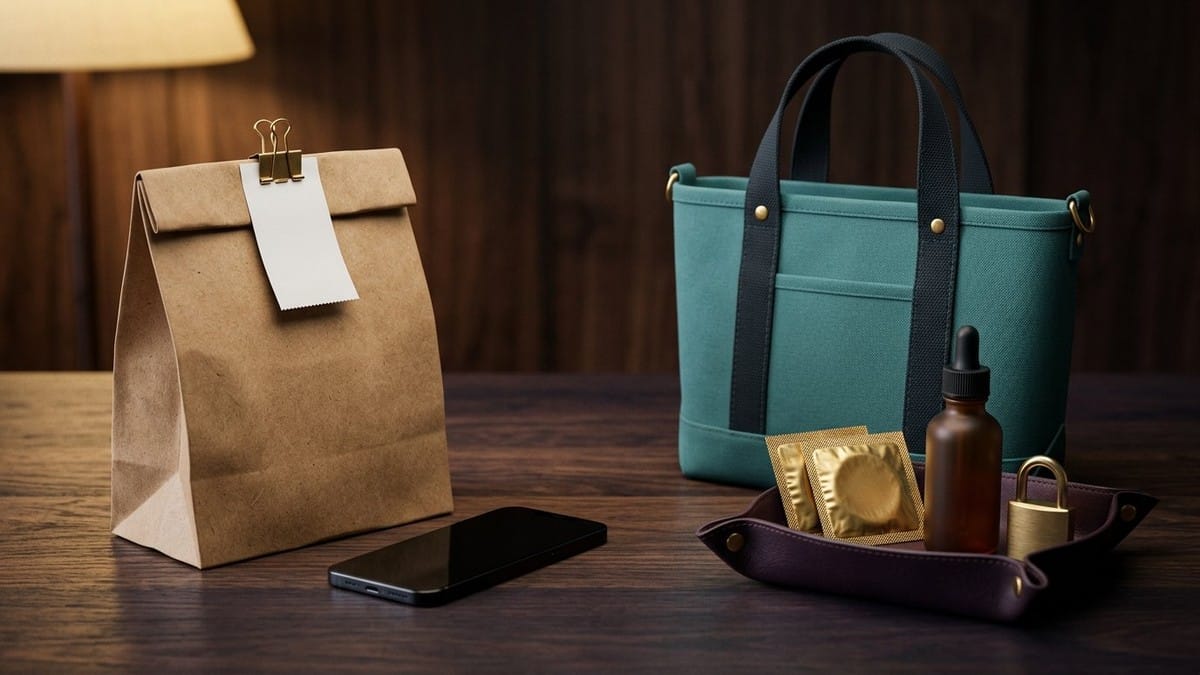
Short answer: Ordering condoms, personal lubricant, pregnancy tests or over-the-counter emergency contraception on an instant-delivery app (such as DoorDash, Uber Eats, Instacart, Deliveroo or rapid-grocery dark stores) is fast—but it does not offer the same privacy as a warehouse parcel shipped to a 24/7 postal locker. Depending on whether your order is fulfilled via “Shop & Deliver” (where the gig courier picks the item off the shelf themselves) or merchant-packed dark-store bagging, privacy can leak through external stapled thermal receipts, thin supermarket carrier bags, out-of-stock substitution push alerts, and mandatory doorstep PIN or photo-ID checks (Instacart Age-Restricted Policy; Uber Deliveries Proof of Delivery).
First-hand data transparency note: Because bag thickness and whether a store worker staples an itemised receipt to the outside of a paper bag vary by store branch and shift, Dot Sexual’s research rules prohibit claiming that any instant-delivery app is “100% opaque” without dated first-hand test-order photographs. Instead, this guide audits the official fulfilment workflows, ID/PIN handoff triggers and substitution settings across major instant-delivery models vs pharmacy Click & Collect.
How instant-delivery apps actually fulfil condom and pharmacy orders
When you tap “Order” on a 15-to-60-minute delivery app, your order follows one of three completely different operational pipelines—each with its own visibility footprint:
- Model A — Gig-Shopper “Shop & Deliver” (e.g., Instacart, DoorDash Supermarket/Pharmacy Shop, Uber Eats Grocery): The courier is an independent shopper who sees the exact product title, brand, nominal width and photo on their phone app, walks into the local supermarket or pharmacy, picks the item off the shelf, scans the barcode at checkout, and places it in a standard store checkout bag.
- Model B — Merchant-Packed / Rapid Dark-Store Delivery (e.g., Gopuff, Deliveroo Hop, store-picked pharmacy orders): Store or warehouse staff pack the order before the rider arrives, and seal it with a sticker. The rider does not pick the items off the shelf—however, many POS systems print an itemised thermal receipt and staple it to the outside of the bag so the rider can match the customer name and order code at pickup.
- Model C — Dedicated Prescription / Pharmacy Courier Seal (DoorDash Prescription Delivery, NHS/pharmacy courier partners): Dispensed pharmacy medications are sealed by a pharmacist inside a tamper-evident opaque pharmacy bag with only the recipient’s name and address visible on the outer label, but almost always require an in-person signature, PIN or ID verification at the door (Uber Deliveries Pharmacy Verification).
Side-by-side comparison: instant-delivery models vs Click & Collect and lockers
Compare who sees your order items, what packaging is used, and whether “Leave at Door” works across all five buying routes (checked 22 October 2026).
| Buying route | Does the courier see the exact item name in their app? | Outer bag & receipt leak risk | Can it be left unattended (“Leave at Door”)? | Best use case |
|---|---|---|---|---|
| 1. Gig-Shopper “Shop & Deliver” (supermarket / chemist aisle pick via Instacart, DoorDash, Uber Eats) | Yes. The shopper’s app displays the product photo, brand and size so they can find and scan it on the shelf. | Medium–High: Packed in standard supermarket/pharmacy paper or thin plastic bags; itemised receipt may be inside or stapled outside. | Usually yes for condoms/lube, UNLESS the store flags an OTC medicine or age-restricted item requiring a live ID scan (Instacart Policy; DoorDash Policy). | When you live alone and need condoms, lube or a pregnancy test within 45 minutes without leaving home. |
| 2. Rapid Dark-Store / Warehouse App (merchant-packed rapid delivery) | Usually no (the rider sees only the pickup code and bag count, while warehouse pickers pack the bag). | Medium: Usually brown paper or opaque branded bags, but external order-manifest stickers often list item descriptions in small print. | Yes (unless a PIN code is triggered by your account or building address, or an age-restricted item is in the basket). | Fast delivery to a private flat or when you meet the rider outside your building entrance with your own backpack. |
| 3. Pharmacist-Sealed Prescription / OTC Courier (DoorDash Rx / pharmacy courier) | No. Sealed by the pharmacy team in tamper-evident opaque packaging before handoff. | Low on the bag (clinical privacy rules hide drug names on the outer label), but clearly marked as a pharmacy delivery. | No. Almost always requires in-person handoff, recipient PIN code, signature or government photo ID (Uber Pharmacy Proof of Delivery). | Receiving prescriptions or pharmacist-dispensed items when you are home alone to sign or give the PIN. |
| 4. Pharmacy Click & Collect / In-Store Self-Checkout | No courier involved. | Zero doorstep risk: You place the sealed pharmacy bag directly into your own opaque backpack or tote bag inside the shop. | N/A — you collect in person at your convenience. | Best urgent same-day option when living with family or flatmates. |
| 5. Official Postal Hold / 24/7 Parcel Locker (USPS Hold, Royal Mail, FlexDelivery, AusPost) | No. Sealed in a corrugated shipping carton at the warehouse. | Lowest: Collected 24/7 via SMS/app PIN at a locker or post office with photo ID; zero home doorstep visit. | Held securely inside the locker or post office for 2 to 18 days. | Gold standard for planned orders of condoms, lubricants and sex toys in shared households. |
Five instant-delivery privacy traps—and how to prevent each one
If you need to use an instant-delivery app in an urgent situation—for example, after a condom breaks at night and you cannot leave the house—use this five-point checklist before placing the order:
| Instant-delivery privacy trap | Why it happens in the app workflow | How to prevent it before checkout |
|---|---|---|
| 1. Out-of-stock substitution calls & push notifications | If your chosen condom nominal width or pregnancy test is out of stock on the shelf, “Shop & Deliver” apps automatically send loud push alerts or trigger a phone call from the shopper asking: “They are out of the 56 mm condoms—do you want ribbed instead?” | Before checkout, set the item’s out-of-stock preference to “Refund item if unavailable — do not substitute” (or pre-select one specific approved backup item in the app). |
| 2. Accidental age-verification lock on “Leave at Door” | Adding a bottle of wine, beer, vape pods, or certain age-gated OTC cold/cough products to the same basket forces the entire order into mandatory face-to-face government ID scanning at the doorstep (Instacart; DoorDash; Uber Eats). | Never bundle alcohol, tobacco or age-restricted cough medicines with an intimate pharmacy order if you want contactless drop-off. |
| 3. Stapled external receipt & thin grocery bags | Supermarket and chemist bags are often semi-translucent under hallway lighting, and staff staple the itemised receipt to the outside handle. | Order 2–3 ordinary grocery or toiletries items (such as cereal, body wash or tissues) in the same basket so a small square box is not the only silhouette in the bag, and meet the rider outside the building gate with your own backpack so you can remove the outer receipt before walking inside. |
| 4. “Leave at Door” photo uploaded to shared accounts | Contactless couriers must take a proof-of-delivery photo of the bag on your doorstep, which is emailed and pushed to the account holder. | Never use a family-shared Uber/DoorDash/Instacart account; turn off doorbell-camera announcements if household members monitor smart-doorbell feeds. |
| 5. Ordering emergency contraception on a slow or out-of-stock courier route | Every hour counts for oral emergency contraception (especially near ovulation), and some jurisdictions require a brief pharmacist consultation that a third-party rider cannot complete on your behalf (see US, UK, Canada & Australia EC rules). | In the US and Canada (where levonorgestrel is OTC on the shelf), instant-delivery apps can deliver OTC levonorgestrel; in the UK and Australia (where pharmacist supply rules apply), walk in or use the pharmacy’s own consultation service directly. |
When to skip delivery apps and use a clinic or pharmacy in person
- When you are between 72 and 120 hours after unprotected sex (or near ovulation): Instant-delivery apps typically stock only over-the-counter levonorgestrel (`1.5 mg`), which loses efficacy after 72 hours and cannot work once the LH surge has started. Go to a pharmacist, sexual-health clinic or doctor for ulipristal acetate (`30 mg`) or an emergency copper IUD (compare country rules here).
- When you need HIV PEP within 72 hours: HIV post-exposure prophylaxis requires an urgent baseline blood test and a 28-day prescription from a sexual-health clinic or emergency department—use our Broken or Slipped Condom Action Responder to check your window immediately.
Method, scope and sources
This guide synthesises official courier-platform merchant/consumer policies and national postal/pharmacy privacy rules, checked 22 October 2026:
- DoorDash Help Center. Prescription Delivery — Sealed Pharmacy Packaging Rules & Guidelines for Selling Age-Restricted Items on DoorDash (checked 22 October 2026).
- Instacart Help Center. Age-restricted items policies (OTC, Rx and ID verification rules) (checked 22 October 2026).
- Uber Developer / Uber Eats Documentation. Proof of Delivery — Pharmacy PIN, Signature and ID Verification Workflows & Age-Restricted Items Delivery with Uber Eats (checked 22 October 2026).
- UK National Health Service (NHS). Visiting a pharmacy — Private consultation rooms and dispensing privacy (checked 22 October 2026).
- United States Postal Service (USPS) & Canada Post. USPS Hold for Pickup Service & Canada Post FlexDelivery (checked 22 October 2026).