DoxyPEP (Doxycycline After Sex): The 72-Hour STI Prevention Clock, Trial Efficacy and Rules by Country
Taking 200 mg of doxycycline within 72 hours (ideally 24 hours) after condomless sex lowers syphilis and chlamydia by 70%–88% in clinical trials. Here are the dosing rules, stomach-protection steps, and 2024–2026 US, UK, EU, Australian, and Canadian guidelines.

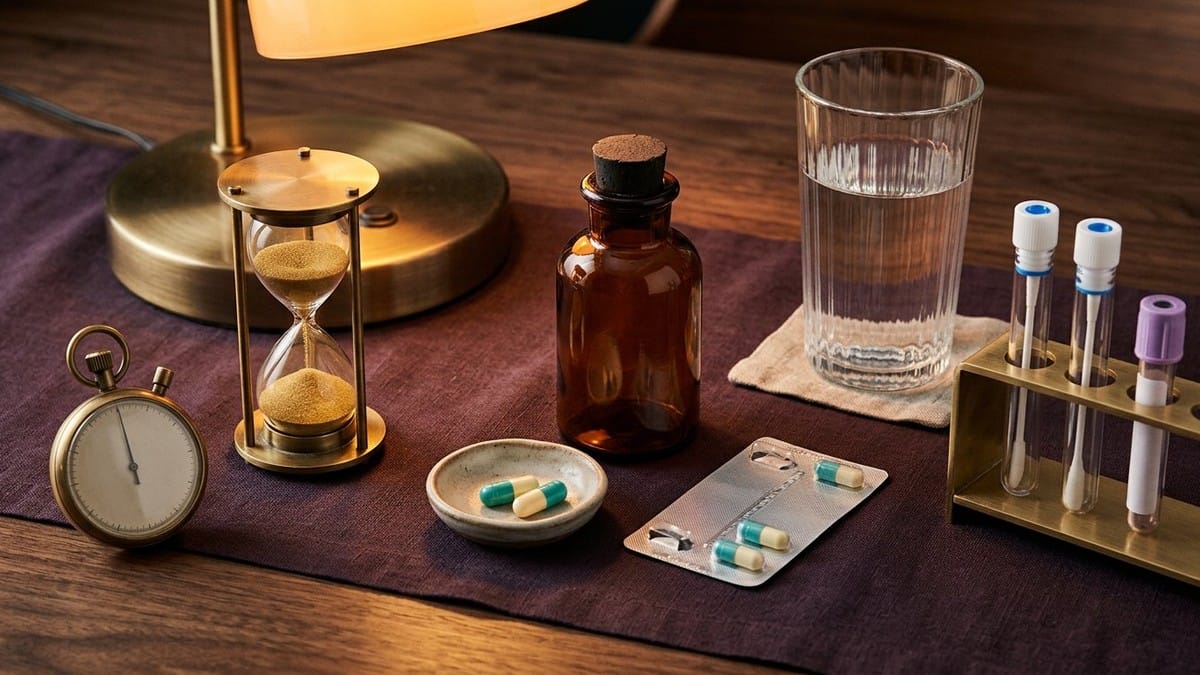
Asked online (paraphrased): “I had condomless sex last night and heard about ‘DoxyPEP’—taking a 200 mg dose of doxycycline afterward like a morning-after pill for STIs. How many hours do I have to take it, which STIs does it actually block, why do US, UK, Canadian and Australian rules differ on gonorrhoea, and can I just use leftover acne antibiotics?”
Direct answer: DoxyPEP (doxycycline post-exposure prophylaxis) is a single 200 mg oral dose of doxycycline (usually two 100 mg capsules or tablets) taken as soon as possible—ideally within 24 hours and no later than 72 hours (3 days)—after condomless oral, anal, or vaginal sex, with a strict maximum of 200 mg per 24 hours (U.S. CDC Clinical Guidelines, MMWR 2024, checked 26 October 2026; WHO Global Doxy-PEP Guidelines, PLOS Medicine 2026). In randomized controlled trials among gay, bisexual, and other men who have sex with men (MSM) and transgender women, DoxyPEP cut chlamydia by 70%–88% and early syphilis by 73%–87%, while reducing gonorrhoea by 0%–55% depending on local tetracycline resistance (Luetkemeyer et al., NEJM 2023; BASHH UK National Guideline, 2025). It does not prevent HIV, mpox, herpes (HSV), HPV, or hepatitis—and you should never take expired tetracyclines or unprescribed courses.
The two clocks: the 72-hour dosing window vs the quarterly screening clock
Just like HIV PEP (72 hours) and emergency contraception (72–120 hours), DoxyPEP works during the narrow incubation window after bacteria reach the mucosa but before they establish a systemic or deep tissue infection. Every major guideline separates the immediate post-sex dosing clock from the ongoing 3-month screening clock (CDC MMWR 2024; NYS DOH Clinical Guidelines):
| Time window | What to do | Clinical rule & reason |
|---|---|---|
| 0 to 24 hours after condomless sex (Optimal Window) | Take 200 mg oral doxycycline (two 100 mg pills or one 200 mg tablet) with a full glass of water (≥240 mL / 8 oz) and food or a light snack. | In the DoxyPEP and DOXYVAC trials, participants were instructed to take the dose ideally within 24 hours; earlier exposure clearance gives Treponema pallidum and Chlamydia trachomatis the least time to replicate. |
| 24 to 72 hours after condomless sex (Maximum Cutoff) | Take the single 200 mg dose as soon as possible before Hour 72. | 72 hours (3 days) is the outer clinical limit studied in randomized trials. After 72 hours, a single 200 mg prophylactic dose is not recommended; instead, follow the Day-14 NAAT and Day-45/90 syphilis testing schedule. |
| Multiple encounters over several days | Take at most one 200 mg dose per 24-hour period. | CDC, UK BASHH (2025), and ASHM cap dosing at 200 mg every 24 hours. Under UK BASHH guidance, if risk continues across a weekend, a single 200 mg dose covers the preceding 72-hour window, or daily 200 mg dosing can be used during consecutive-day exposures without exceeding 200 mg/24h. |
| Within 2 hours before or after the dose | Avoid dairy (milk, yoghurt, cheese), calcium/iron/magnesium supplements, multivitamins, and aluminium/magnesium/bismuth antacids; remain upright for ≥30 minutes. | Divalent and trivalent metal cations chelate (bind) doxycycline in the gut and slash bloodstream absorption; lying flat right after swallowing doxycycline can cause severe chemical ulceration of the gullet (pill oesophagitis) (CDC 2024). |
| Every 3 months (Quarterly Screening Clock) | Complete 3-site NAAT screening (throat, rectal, urine/vaginal swabs for chlamydia & gonorrhoea), blood syphilis serology (RPR/treponemal), and HIV test. | DoxyPEP reduces risk by ~70%–88%, not 100%, and recent clinical data show partial antibiotic exposure can delay or mute early symptoms—making routine 3-month asymptomatic testing essential (IAS-USA 2024/2025). |
What the clinical trials proved—and why results differ by STI and population
Four major randomized controlled trials shape global 2024–2026 guidelines:
- The U.S. DoxyPEP Trial (Luetkemeyer et al., NEJM 2023, n = 501): Conducted in San Francisco and Seattle among MSM and transgender women taking HIV PrEP or living with HIV who had at least one bacterial STI in the past year. Taking 200 mg doxycycline within 72 hours reduced quarterly STI incidence by two-thirds overall:
- Chlamydia: reduced by 88% in the PrEP cohort (RR 0.12) and 74% in the cohort living with HIV (RR 0.26).
- Early Syphilis: reduced by 87% in the PrEP cohort (RR 0.13) and 77% in the cohort living with HIV (RR 0.23).
- Gonorrhoea: reduced by 55% in the PrEP cohort (RR 0.45) and 57% in the cohort living with HIV (RR 0.43).
- The French ANRS IPERGAY & ANRS 174 DOXYVAC Trials (Molina et al., Lancet Infect Dis 2018 & 2024, n = 545): Confirmed an 86% reduction in chlamydia (aHR 0.14) and a 79% reduction in syphilis (aHR 0.21). Gonorrhoea fell by 33% to 51%—less than in the US trial because background tetracycline resistance in European Neisseria gonorrhoeae strains is higher.
- The Kenya dPEP Trial in Cisgender Women (Stewart et al., NEJM 2023, n = 449 cisgender women aged 18–30): Overall bacterial STI incidence was not significantly reduced (RR 0.88; 95% CI 0.60–1.29). Subsequent pharmacokinetic and objective hair-testing analyses clarified two reasons: first, although vaginal and endocervical tissue concentrations of doxycycline after a 200 mg dose are biologically high enough to inhibit chlamydia and syphilis, objective hair testing detected doxycycline in only 29% of follow-up visits (reflecting pill-taking barriers); second, nearly 100% of local gonorrhoea isolates carried the tetM high-level tetracycline-resistance gene (CDC MMWR 2024).
Country-by-country rules: US, UK, Canada, Australia and WHO (2026)
Because tetracycline resistance in Neisseria gonorrhoeae varies sharply by region—ranging from roughly 20%–30% in parts of the United States to over 70%–80% in the United Kingdom and Australia—national sexual-health bodies frame DoxyPEP differently (CDC 2024; BASHH 2025; ASHM; WHO 2026):
| Jurisdiction & Guideline | Primary recommended population | Target STIs & local gonorrhoea stance | How to access legally & safely |
|---|---|---|---|
| United States (CDC MMWR June 2024; AAFP 2024) | Recommend offering a prescription to gay, bisexual, and other MSM and transgender women with ≥1 bacterial STI (syphilis, chlamydia, or gonorrhoea) in the past 12 months; use shared decision-making for other adults at elevated exposure risk. | Syphilis, chlamydia & gonorrhoea (reduces syphilis/chlamydia >70% and gonorrhoea ~50% in US trials). | Prescription from any primary-care clinician, PrEP provider, Title X / public STI clinic, or licensed telehealth clinic; covered by most insurance and Medicaid plans as generic doxycycline hyclate/monohydrate. |
| United Kingdom (BASHH UK National Guideline, June 2025; Eurosurveillance 2025) | People assigned male at birth (including cisgender MSM, trans women, and non-binary people) at elevated risk of syphilis (such as recent syphilis/multiple bacterial STIs or condomless sex in higher-prevalence networks). | Syphilis primary target (with chlamydia reduction as secondary benefit). Not recommended for gonorrhoea due to high UK tetracycline resistance; instead, UK NHS sexual-health clinics offer the 4CMenB gonorrhoea vaccine (rolled out 2025/2026). | Free and confidential through NHS GUM / sexual-health clinics without GP notification; reviewed every 6 months alongside quarterly STI screening. |
| Australia (ASHM Consensus Statement 2024–2026) | GBMSM and transgender women at higher risk of syphilis and chlamydia (especially those with recent bacterial STIs or attending PrEP clinics), reviewed after 6 months. | Syphilis & chlamydia primary targets. Not relied upon for gonorrhoea prevention due to high tetracycline resistance in Australian gonococcal isolates and antimicrobial stewardship priorities. | Prescribed by sexual-health clinics, S100/PrEP GPs, and primary-care doctors on PBS/private script alongside 3-monthly STI screening. |
| Canada (BCCDC, CATIE & provincial sexual-health programs 2024–2026) | MSM and transgender women with a recent bacterial STI diagnosis or recurrent exposure risk, via shared clinical decision-making. | Syphilis & chlamydia primary targets (gonorrhoea resistance exceeds 50%–60% in several Canadian provinces). | Prescribed through public sexual-health clinics, PrEP clinics, and primary-care providers (see Canadian clinic routes). |
| Global / WHO (WHO 2026 Doxy-PEP Guidelines) | MSM and transgender women in settings with high syphilis/chlamydia burden, paired with antimicrobial resistance (AMR) monitoring. | Syphilis & chlamydia (70%–85% reduction); gonorrhoea efficacy depends on local AMR surveillance. | Integrated into HIV PrEP and STI clinic services with standardized 200 mg post-exposure packs. |
Five safety rules before you take DoxyPEP
- Never use expired tetracyclines or someone else’s mystery antibiotic: Degraded, out-of-date tetracycline compounds can cause reversible proximal renal tubular damage (Fanconi-like syndrome), and taking amoxicillin, azithromycin, or ciprofloxacin after sex does not work as DoxyPEP and drives dangerous macrolide/fluoroquinolone resistance.
- Do not confuse a single 200 mg DoxyPEP dose with full STI treatment: If you already have urethral, vaginal, or rectal discharge, burning when peeing, a painless genital/oral/anal ulcer, or a partner who just tested positive for an active STI, a single 200 mg dose is not enough to cure an established infection (for example, chlamydia treatment requires 100 mg twice daily for 7 full days, and syphilis requires intramuscular benzathine penicillin G or 14–28 days of doxycycline). Partial dosing can mask early RPR/symptom progression (IAS-USA 2025).
- Protect your gullet and skin: Swallow the tablets with a full glass of water (≥240 mL) and stay sitting or standing upright for at least 30 minutes so the capsule does not lodge in the lower oesophagus. Wear broad-spectrum SPF 30+ sunscreen outdoors, as doxycycline can trigger a brisk sunburn reaction (phototoxicity) (CDC 2024).
- Check pregnancy and drug exclusions: Doxycycline is generally avoided during the second and third trimesters of pregnancy and should never be combined with oral retinoids (such as isotretinoin/Accutane) because both can raise intracranial pressure (pseudotumor cerebri).
- Remember what DoxyPEP does not cover: DoxyPEP has zero effect on HIV (use 72-hour HIV PEP after an acute exposure or ongoing HIV PrEP), herpes (HSV-1/HSV-2), mpox, HPV, hepatitis A/B/C, or trichomoniasis (see what a standard STI panel includes and misses).
If an exposure happened within the last 5 days and you need to check HIV PEP, emergency contraception, and STI testing dates side by side, run our browser-only Broken Condom & Unprotected Exposure Action Responder and STI Test Window-Period Explorer on Tools & Charts.
Sources and evidence notes
- U.S. Centers for Disease Control and Prevention (CDC). Bachmann LH, Barbee LA, Chan P, et al. CDC Clinical Guidelines on the Use of Doxycycline Postexposure Prophylaxis for Bacterial Sexually Transmitted Infection Prevention, United States, 2024. MMWR Recomm Rep. 2024;73(No. RR-2):1–8. CDC MMWR / PubMed Central.
- World Health Organization (WHO). 2026 WHO guidelines recommending doxycycline post-exposure prophylaxis (doxy-PEP) and antimicrobial resistance monitoring. PLOS Medicine. 2026. PLOS Medicine.
- British Association for Sexual Health and HIV (BASHH). Saunders J, Deering J, Dewsnap C, et al. BASHH UK national guideline for the use of doxycycline post-exposure prophylaxis (DoxyPEP) for the prevention of syphilis, 2025. Int J STD AIDS 2025 / Eurosurveillance 2025;30(26):2500454. Eurosurveillance / HIV i-Base summary.
- Luetkemeyer AF, Donnell D, Dombrowski JC, et al. Postexposure Doxycycline to Prevent Bacterial Sexually Transmitted Infections (DoxyPEP Trial). New England Journal of Medicine. 2023;388(14):1296–1306. NEJM.
- Molina JM, Bercot B, Assoumou L, et al. Doxycycline prophylaxis and meningococcal group B vaccine to prevent bacterial sexually transmitted infections in France (ANRS 174 DOXYVAC). The Lancet Infectious Diseases. 2024;24(10):1093–1104. NYS DOH Clinical Guidelines.
- Stewart J, Oware K, Donnell D, et al. Doxycycline Prophylaxis to Prevent Sexually Transmitted Infections in Women (Kenya dPEP Trial). New England Journal of Medicine. 2023;389(25):2331–2340. NEJM.
- Australasian Society for HIV, Viral Hepatitis and Sexual Health Medicine (ASHM). Australian Consensus Statement on Doxy-PEP for Conditions of Sexual Health. ASHM.
Evidence checked: 26 October 2026. General educational reference only; DoxyPEP requires an individual clinical assessment and prescription from a qualified healthcare professional.