Sex and Intimacy After a Hysterectomy: Vaginal Cuff Healing, Cervix-Sparing Surgery and the 6–12 Week Clock
After a total hysterectomy, the top of the vagina is sutured into a vaginal cuff. Because early intercourse is the #1 trigger of vaginal cuff dehiscence, wait 6–12 weeks (especially after laparoscopic/robotic surgery) before penetration.

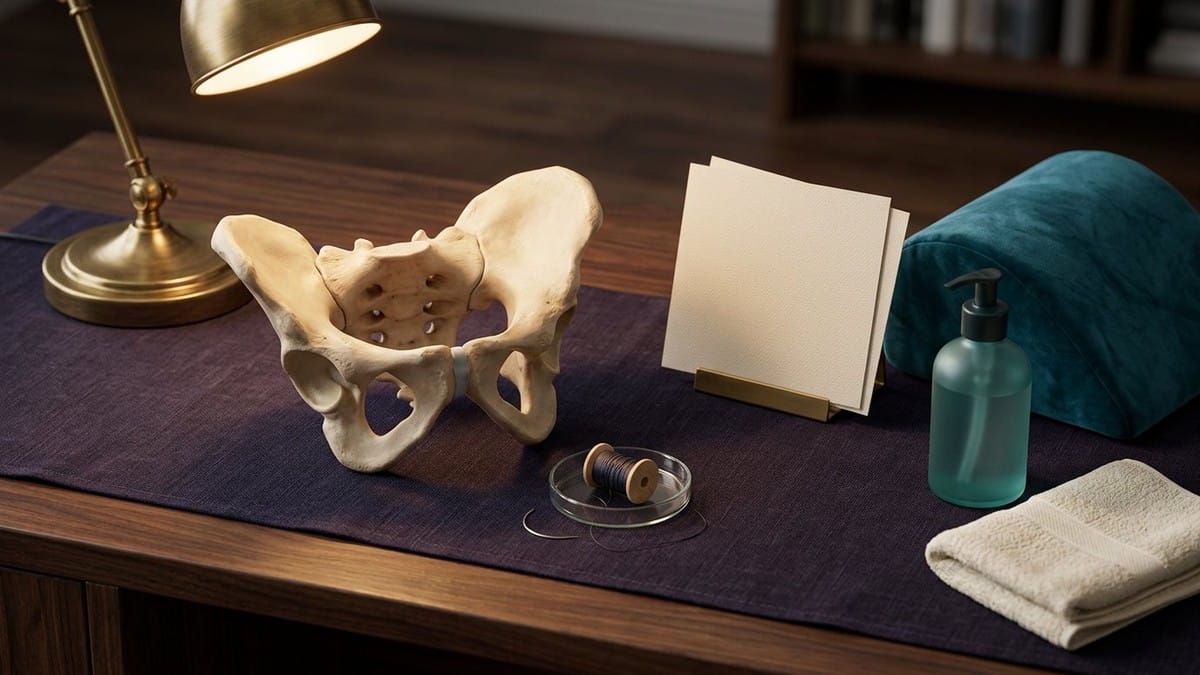
Short answer: When you can safely have sex after a hysterectomy depends on two separate clocks—and above all on whether your cervix was removed (creating a sutured vaginal cuff at the top of the vagina). Gentle external, non-penetrative intimacy can resume once you feel comfortable (often 2 to 4 weeks). However, after a total hysterectomy (abdominal, vaginal, laparoscopic or robotic), you must wait at least 6 to 8 weeks—and commonly 8 to 12 weeks after laparoscopic or robotic total hysterectomy—plus zero bleeding and surgeon clearance before putting anything inside the vagina (NHS; PMC12942081, 2026). Penetrative sex before the vaginal cuff has gained full tensile strength is the single leading trigger of vaginal cuff dehiscence (surgical wound separation).
Emergency warning signs: Go to an emergency department immediately if, during or after sex or straining following a hysterectomy, you experience sudden sharp pelvic or lower abdominal pain, a “popping” or tearing sensation at the top of the vagina, fresh bright-red vaginal bleeding, a sudden gush of watery/pink fluid, or any tissue protruding into the vagina. Vaginal cuff dehiscence with bowel evisceration is a surgical emergency (PMC9728080).
Why “6 weeks” is not an automatic green light: the vaginal cuff explained
Many older hospital leaflets print a generic “wait 6 weeks before sex” rule for all pelvic operations. Modern gynaecological surgery research shows why you must look at your exact operative note:
- Total hysterectomy (uterus AND cervix removed): When the surgeon removes the cervix along with the uterus, the open top (apex) of the vaginal canal is stitched closed with absorbable sutures. That internal scar line is called the vaginal cuff (or vaginal vault). Because the top of the vagina receives direct mechanical impact during deep thrusting, the cuff needs 6 to 12 weeks for collagen remodelling to withstand coital pressure.
- Why laparoscopic and robotic total hysterectomies often require 8 to 12 weeks: Although keyhole (laparoscopic or robot-assisted) incisions on your belly heal in days, the internal vaginal cuff actually heals more slowly after laparoscopic/robotic total hysterectomy than after open or vaginal surgery (in part because thermal energy/electrocautery is used to divide the tissue and laparoscopic magnification can lead to smaller tissue bites). In a 2026 retrospective cohort study of 684 women after robot-assisted total laparoscopic hysterectomy (PMC12942081, Jan 2026), vaginal intercourse was the triggering event in 82.1% of vaginal cuff dehiscence cases, and the median time to dehiscence was 73 days (~10.4 weeks) after surgery.
- Subtotal / supracervical hysterectomy (uterus removed, cervix kept): Because the cervix remains intact at the top of the vagina, there is no vaginal cuff suture line inside the vaginal canal. Recovery for penetrative sex is typically faster (commonly 4 to 6 weeks once bleeding stops and your surgeon clears you), though you will still need routine cervical screening (Pap/HPV smears) in the future.
Recovery timelines by hysterectomy type and sexual activity
Compare the published healing gates across surgical routes and intimacy types (NHS Hysterectomy Recovery; RCOG Laparoscopic Hysterectomy; Frontiers in Surgery 2022; PMC12942081, 2026).
| Type of hysterectomy | Was the cervix removed? (Vaginal cuff present?) | Clock 1: External non-penetrative intimacy & clitoral orgasm | Clock 2: Vaginal penetration (penis, fingers, internal toys) | Mandatory clearance checklist before penetration |
|---|---|---|---|---|
| Subtotal / Supracervical Hysterectomy (keyhole or open) | No — cervix remains intact; no vaginal cuff suture line. | When comfortable and pain-free (commonly 2 to 4 weeks). | Commonly 4 to 6 weeks once all vaginal spotting/discharge stops and cleared by surgeon. | Zero vaginal bleeding; abdominal incisions healed; core comfort during movement. |
| Total Vaginal or Total Abdominal Hysterectomy | Yes — cervix removed; sutured vaginal cuff at the top of the vagina. | Commonly 2 to 4 weeks for gentle external clitoral touch (discuss with surgeon if you had concurrent pelvic-floor prolapse repair). | Minimum 6 to 8 weeks (and up to 8 to 12 weeks if postmenopausal, diabetic, a smoker, or if granulation tissue/spotting persists). | All bleeding and pinkish/brown discharge completely stopped; speculum cuff check if recommended by your surgical team. |
| Total Laparoscopic (TLH) or Robot-Assisted (RA-TLH) Hysterectomy | Yes — cervix removed; electrosurgically divided and sutured vaginal cuff. | Commonly 2 to 4 weeks for gentle external stimulation with zero internal insertion. | 8 to 12 weeks strongly advised in gynaecological surgery studies (PMC12942081; ScienceDirect RA-TLH series) plus surgeon cuff clearance. | Wait for explicit postoperative cuff clearance; start with shallow, receiver-controlled angles for the first month back. |
| Hysterectomy + Pelvic Organ Prolapse / Pelvic Floor Repair (colporrhaphy / sacrocolpopexy) | Often Yes + vaginal wall incisions along the front/back vaginal canal. | Wait 4 to 6 weeks (or until surgeon confirms external swelling/sutures have settled). | 8 to 12 weeks with mandatory in-person pelvic exam clearance before any vaginal or anal penetration. | Vaginal wall sutures must be fully dissolved and examined so penetration neither tears the repair nor scratches a partner. |
Orgasms, lubrication and hormones: what changes and what stays the same
Many patients worry that removing the uterus will end their ability to orgasm or cause instant menopause. Clinical anatomy and prospective hysterectomy studies show a much more reassuring picture when two distinctions are clear:
| Question | What happens if your ovaries WERE KEPT | What happens if both ovaries WERE REMOVED (bilateral oophorectomy) |
|---|---|---|
| Will I go into menopause and lose oestrogen? | No immediate surgical menopause. Your ovaries continue producing oestradiol and testosterone (though menopause may arrive 1–2 years earlier on average than if you had not had surgery). | Yes — immediate surgical menopause (if premenopausal prior to surgery). Sudden loss of ovarian oestradiol and androgens causes hot flushes, vaginal dryness and mucosal thinning unless managed. |
| What happens to vaginal lubrication and cuff tissue thickness? | Natural arousal lubrication is largely preserved once healed, though using plenty of iso-osmolar water- or silicone-based lubricant is essential during the first months back to protect the cuff scar. | Without oestrogen, the vaginal epithelium thins rapidly. Ask your surgeon about systemic HRT (oestrogen-only HRT is usually used after hysterectomy because there is no endometrium to protect, unless you had severe endometriosis) and/or low-dose local vaginal oestrogen once the cuff is cleared. |
| Will orgasms feel different? | The clitoral complex (glans, crura, vestibular bulbs) and pelvic floor muscles remain completely intact. For women who previously felt deep rhythmic uterine contractions during orgasm, that specific internal uterine squeeze will be absent—while women who had painful adenomyosis, fibroids or endometriosis often report better orgasms once painful uterine cramping is gone. | Clitoral and pelvic-floor orgasm pathways remain intact, though sudden androgen/oestrogen drop can lower spontaneous desire—discuss systemic HRT and hormone support with your gynaecologist. |
How to resume penetrative sex safely after your surgeon clears you
- Ask specifically whether you have a vaginal cuff—and whether an in-person speculum check is offered: Before attempting penetration at Week 8–12, ask your gynaecologist: “Was my cervix removed, and can we check that my vaginal cuff sutures have dissolved with no granulation tissue before I resume penetrative sex?”
- Use generous lubricant and depth-limiting positions for your first 4–6 weeks back: Even after 8–12 weeks, the vaginal cuff scar is still remodelling. Use a water- or silicone-based lubricant, choose receiver-controlled or side-lying positions (or a soft silicone depth-limiting buffer ring on the base of the penis/toy), and avoid aggressive deep cervical-depth thrusting for the first 3 to 6 months.
- Report light pink spotting vs heavy bleeding appropriately: A tiny dot of pink or brownish spotting after the first gentle session can occasionally come from benign vaginal cuff granulation tissue (which a gynaecologist can easily treat in clinic with silver nitrate)—stop penetration and book a routine cuff check. By contrast, bright-red bleeding, clots, watery gushes or sudden pain require immediate emergency-department assessment. See Pelvic Rest, Explained and our interactive recovery clock on Tools & Charts.
Method, scope and sources
This guide synthesises national gynaecology recovery leaflets and peer-reviewed surgical cohort studies on vaginal cuff healing, checked 22 October 2026:
- UK National Health Service (NHS). Hysterectomy — Recovery (sex, lifting and healing timelines) (checked 22 October 2026).
- Royal College of Obstetricians and Gynaecologists (RCOG). Laparoscopic hysterectomy: Recovering well (Patient Information) (checked 22 October 2026).
- National Center for Biotechnology Information (PMC). Risk factors for vaginal cuff dehiscence after robot-assisted total laparoscopic hysterectomy: A retrospective cohort study. 2026 (checked 22 October 2026).
- Frontiers in Surgery. Clinical characteristics and management of vaginal cuff dehiscence and evisceration after total hysterectomy. 2022 (checked 22 October 2026).
- National Center for Biotechnology Information (PMC). Vaginal evisceration after hysterectomy and postoperative pelvic rest recommendations. 2022 & Vaginal Cuff Dehiscence Review. 2023 (checked 22 October 2026).